Emerging from the HEAL Collaborative and grounded in trust, this work demonstrates how investing in resident leadership can transform individual lives while creating lasting, community-owned systems of support.
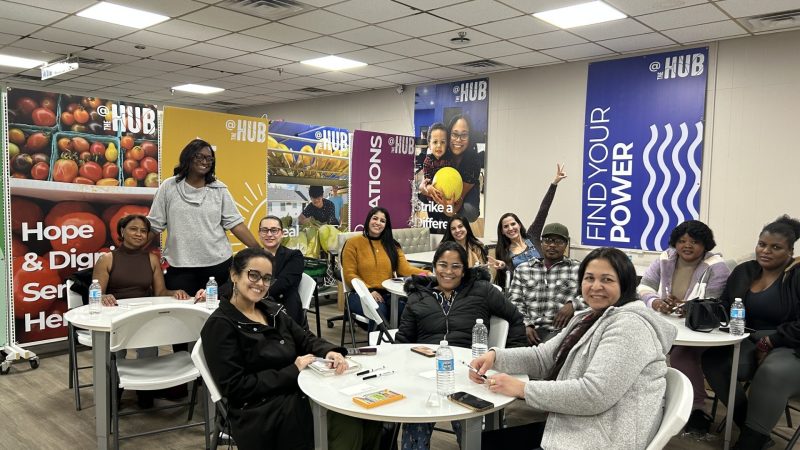
The Community Changemaker Institute is an initiative funded by the Community Foundation of North Central Massachusetts (CFNCM) that empowers residents of greater Gardner's Haitian and Latinx communities by engaging them as resident leaders, known as Community Changemakers. Through biweekly gatherings focused on relationship-building, leadership development, and racial equity training, participants design and lead community initiatives that foster inclusivity, social empowerment, and systemic change.
The Institute emerged from needs identified through the HEAL Collaborative, a resident-driven partnership grounded in Hope, Empower, Access, and Love. HEAL focuses on shifting power dynamics, enhancing social inclusion, promoting economic empowerment, and expanding access to healthy food. Initially serving Winchendon, HEAL expanded into Gardner in 2023. As the city’s diversity grew, particularly with the arrival of Haitian and Latinx residents, community members quickly identified racial equity as a priority area.
Changemakers are organized into culturally and linguistically focused cohorts that create safe, affirming spaces for leadership development and collaborate across cultural lines with HEAL partners and staff. This cross-cultural approach strengthens collective impact while centering the lived experiences of residents most affected by inequity.
Despite early delays during the post-election period, when heightened fear and uncertainty affected immigrant communities, the project adapted its approach and continued implementation with care and responsiveness.
Several initiatives developed through the program have progressed from pilot activities into sustainable, ongoing programming. Most notably, English Learner classes created through this initiative have been integrated as permanent programming at the HUB, ensuring long-term access to language education and community connection beyond the grant period.
The impact of this CFNCM-funded work is best illustrated through lived experience.
When James and his family arrived in the United States from Haiti, they settled in Winchendon, knowing no one. While hopeful for a new beginning, they faced isolation, language barriers, unfamiliar systems, and immediate food insecurity. Applying for SNAP and DTA felt overwhelming without language support, and even after benefits were approved, assistance was insufficient. The family did not know where to turn.
That changed through trust.
Myriam, a Haitian community member and Community Changemaker Institute leader, conducts outreach with Haitian families across the region. As a trusted community voice, she connected with James’s family by listening first and building a relationship. Through Myriam, the family was introduced to the Winchendon Community Action Committee, where bilingual staff and translation tools supported James in navigating SNAP and DTA, enrolling in the food pantry, and accessing food with dignity.
“Change didn’t start with a program—it started with trust, listening, and showing up for families when they needed support the most."
As trust deepened, additional barriers emerged. James was eager to work but lacked English skills, transportation, and a driver’s license. Existing English classes were inaccessible due to distance, limited capacity, or scheduling challenges. His experience became the catalyst for designing locally based, accessible English classes rooted in real community needs.
When James was offered a night-shift job at Walmart, he nearly declined due to lack of transportation. Because the Community Action Committee also operates the Community Connector transit program, reliable rides were arranged, allowing James, and later his wife, to secure stable employment. Today, both parents are enrolled in resident-designed English classes, with childcare and dinner provided so the entire family can participate. Their daughter will soon attend as well.
What began as crisis response has evolved into education, employment, and stability. Within the Haitian community, James is now affectionately known as “the Mayor.” Having navigated complex systems with dignity and support, he now helps newly arrived families access food, benefits, English classes, transportation, and trusted networks.
This is the ripple effect of CFNCM’s investment in resident leadership. One family becomes many, and short-term support becomes lasting systems change rooted in relationships.